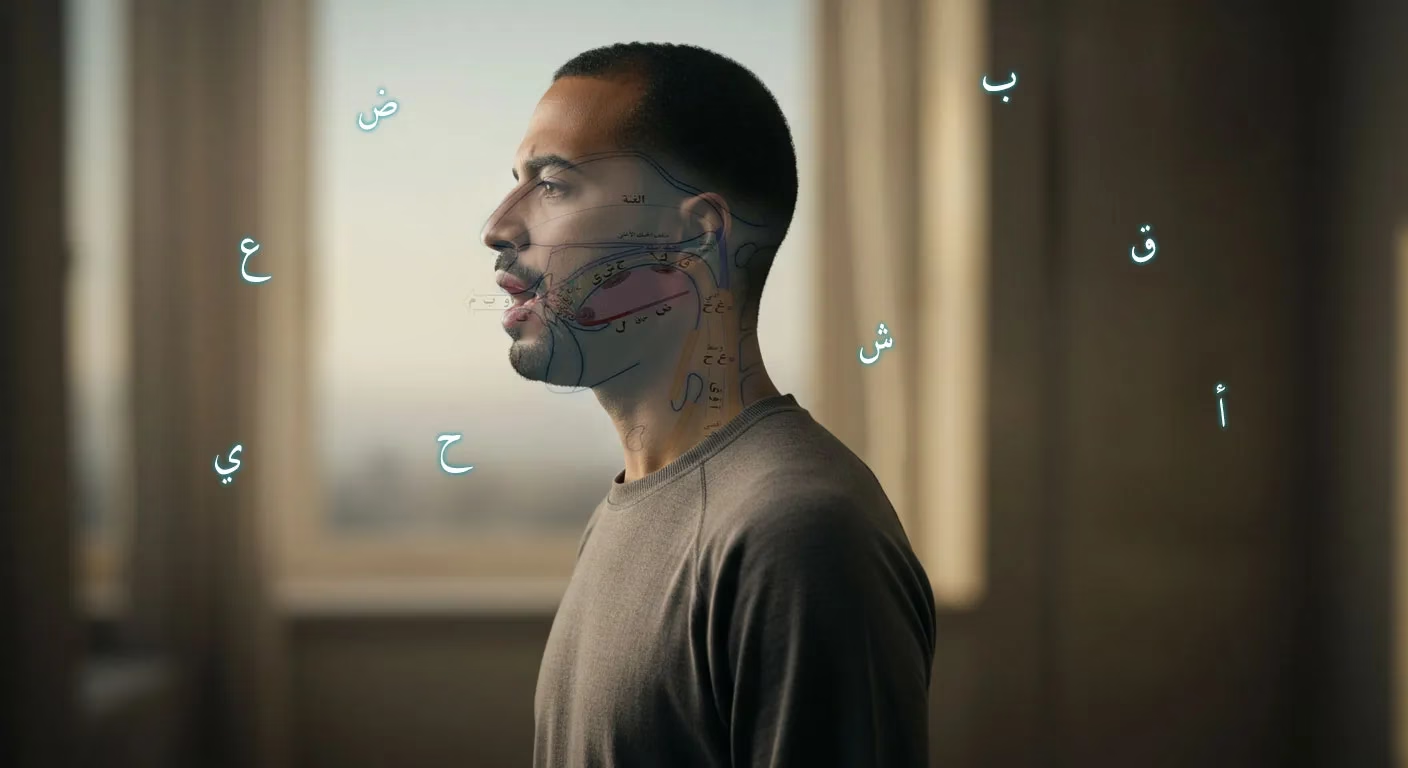
In this exploration of Makharij al Huruf Part 2, we delve into the intricacies of articulation points, specifically focusing on the tongue’s role in pronunciation. Understanding the nuances of these articulation points is crucial for mastering Arabic pronunciation.
Navigating the Tongue’s Articulation Points
Letters are produced by the mouth, primarily involving the tongue and its interaction with various regions of the teeth and mouth. There are four main points of articulation (makhaarij), further categorized into ten sub-categories:
- The posterior part of the tongue – with two subcategories.
- The middle of the tongue – serving as the sole makhraj for three letters.
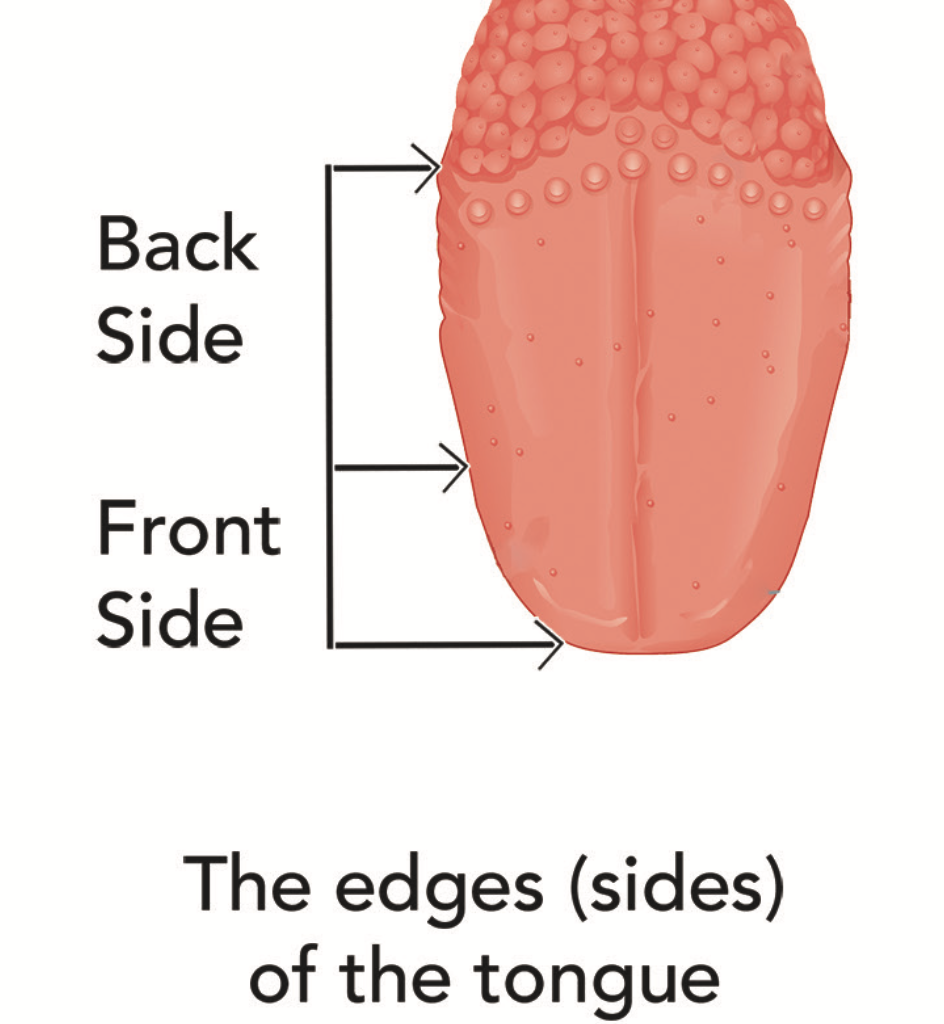
- The lateral aspect of the tongue – featuring two distinct points of articulation.
- The tip of the tongue.
The Furthest Back Part of the Tongue – 2 Subcategories
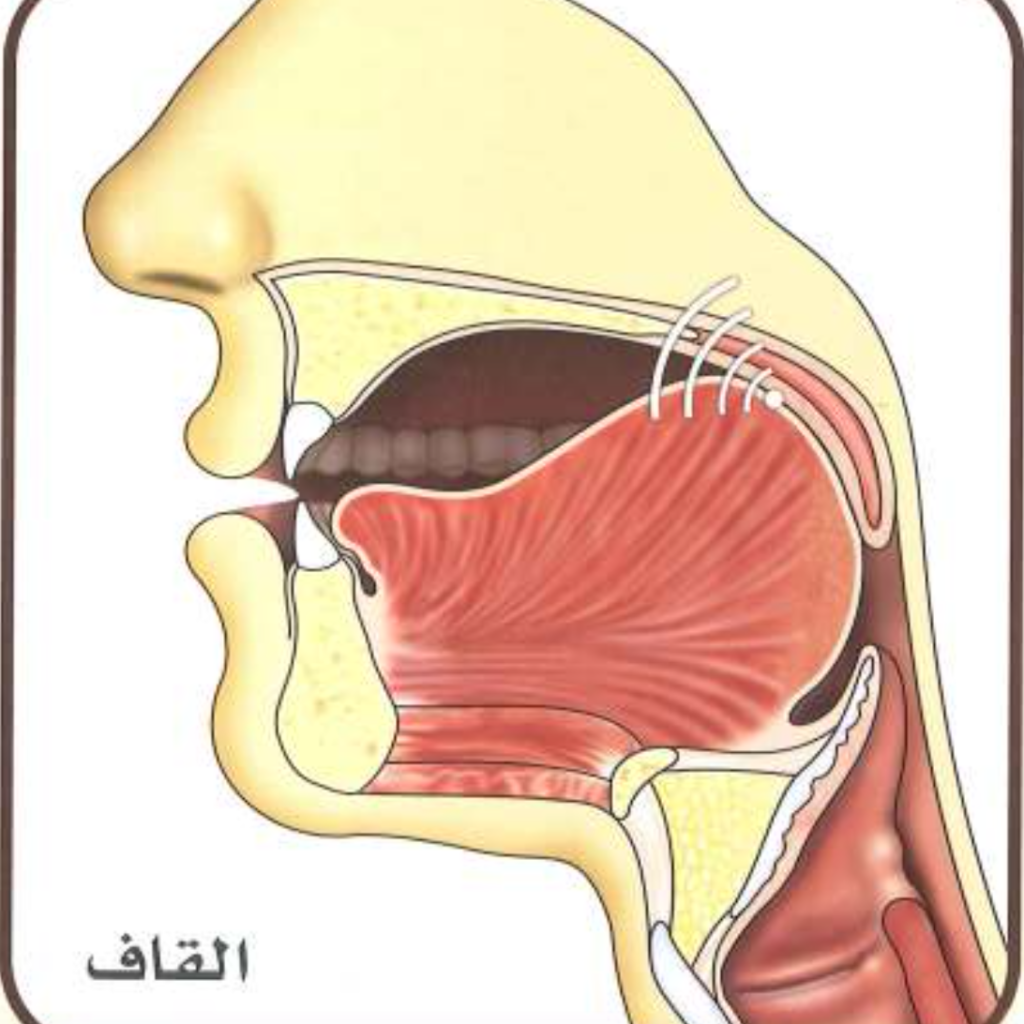
- ق (Qaf):
- Articulation: Extreme back of the tongue touching the upper palate.
- Sound: Creates a thick sound in the tonsils vicinity. (اقْ)
- ك (Kaf):
- Articulation: Slightly in front of ق, tongue not elevated.
- Sound: Back of the tongue produces the sound. (اكْ)
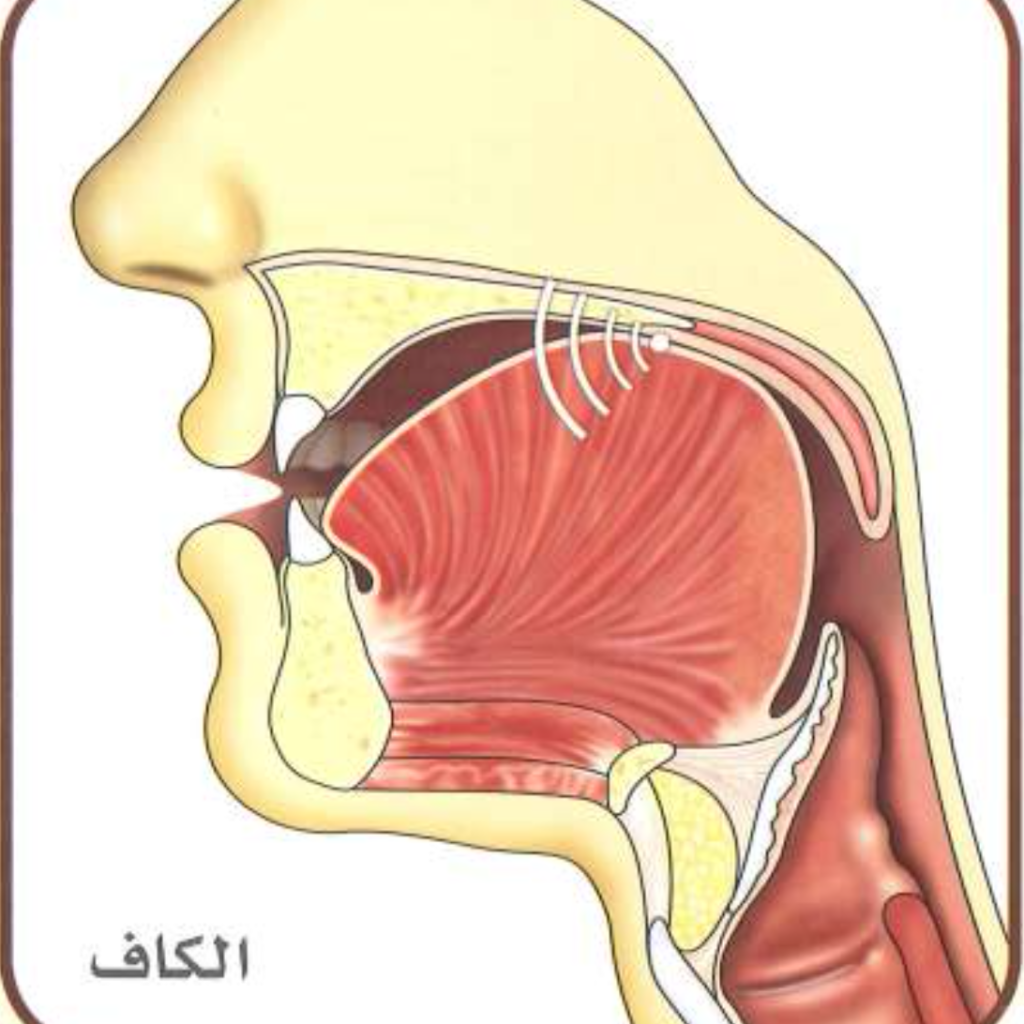
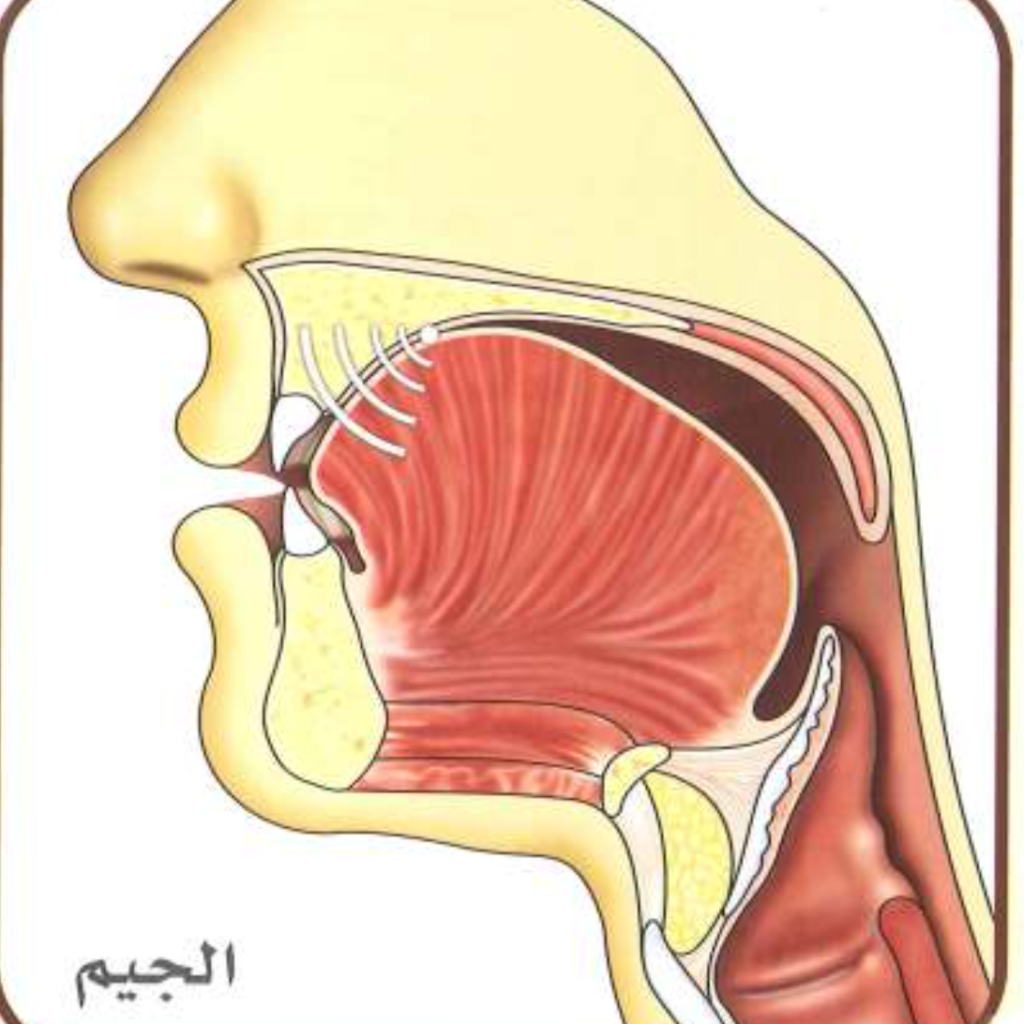
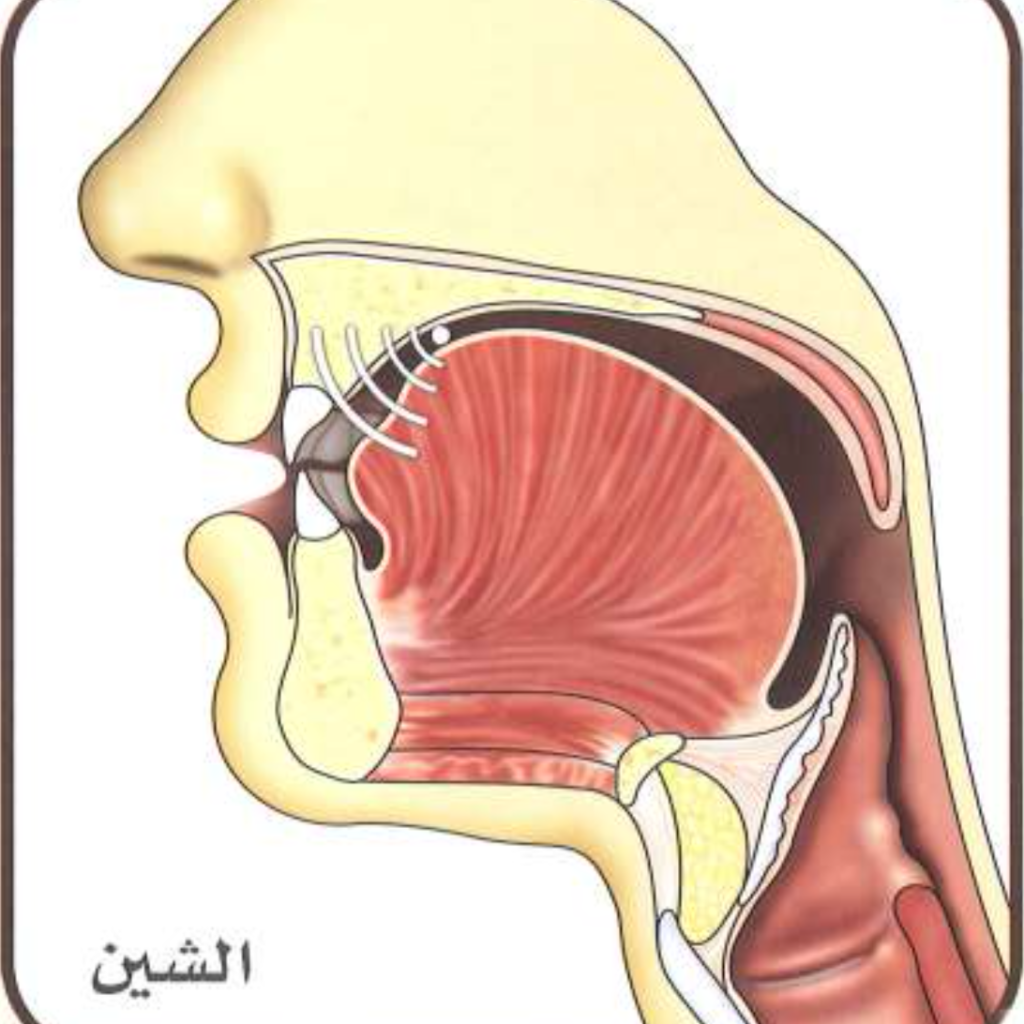
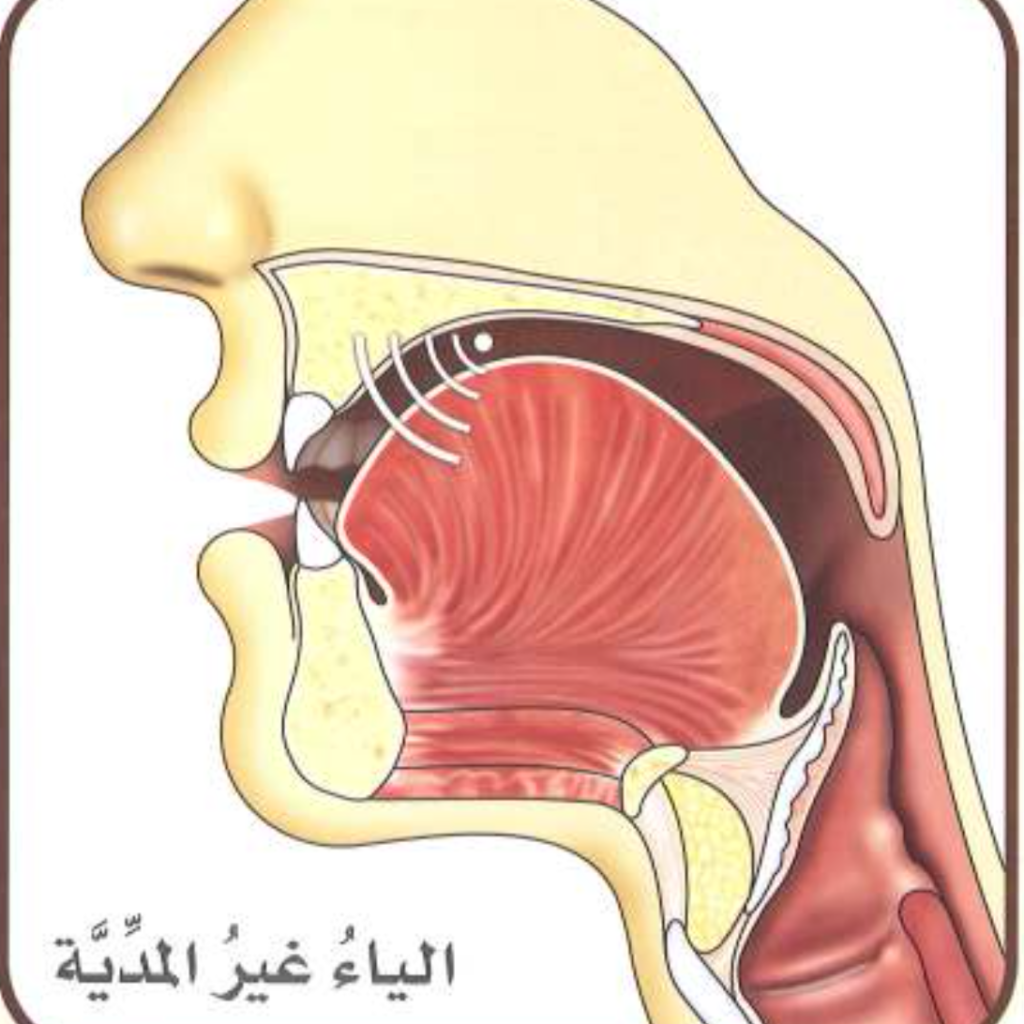
The Middle of the Tongue – 3 Letters
- ج (Jeem), ش (Sheen), and ى (Ya):
- Articulation: Middle part of the tongue contacts the roof of the mouth.
- Sound: Pronounced with the tongue’s midsection.
Enroll now: Tajweed Course
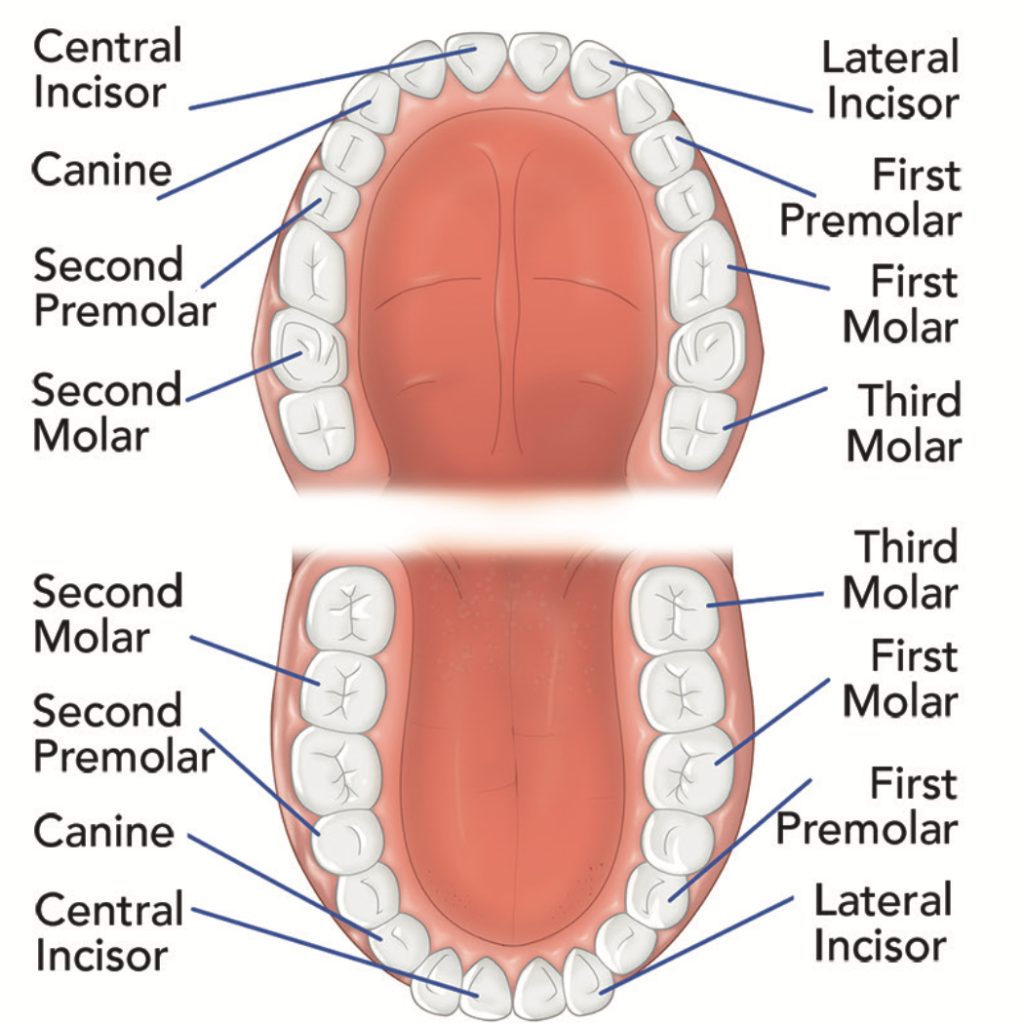
The Teeth
The number of teeth for Adults are 32 as follows:
- Incisors: Typically, adults have a total of 8 incisors (4 central incisors and 4 lateral incisors).
- Canines: There are usually 4 canines in adult dentition, 2 in the upper jaw and 2 in the lower jaw.
- Premolars: Adults typically have 8 premolars (4 in each quadrant).
- Molars: Adults usually have 12 molars (6 in each quadrant – 3 molars in the upper jaw and 3 in the lower jaw on each side).
- Wisdom teeth: Adults have 4.
The Side of the Tongue – 2 Specific Points
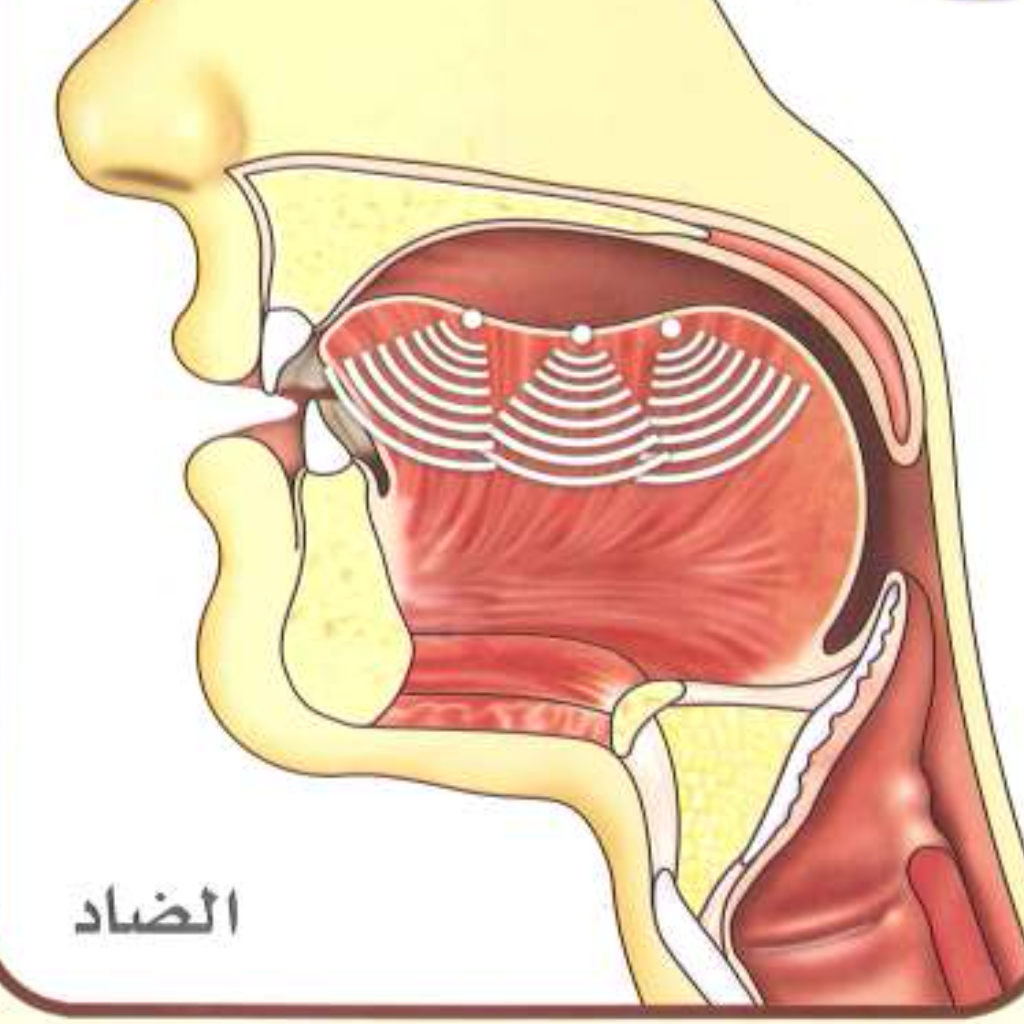
- ض (Dad):
- Articulation: Rear side of the tongue touches upper back teeth (upper molars).
- Sound: Commonly used from the left side. (اضْ)
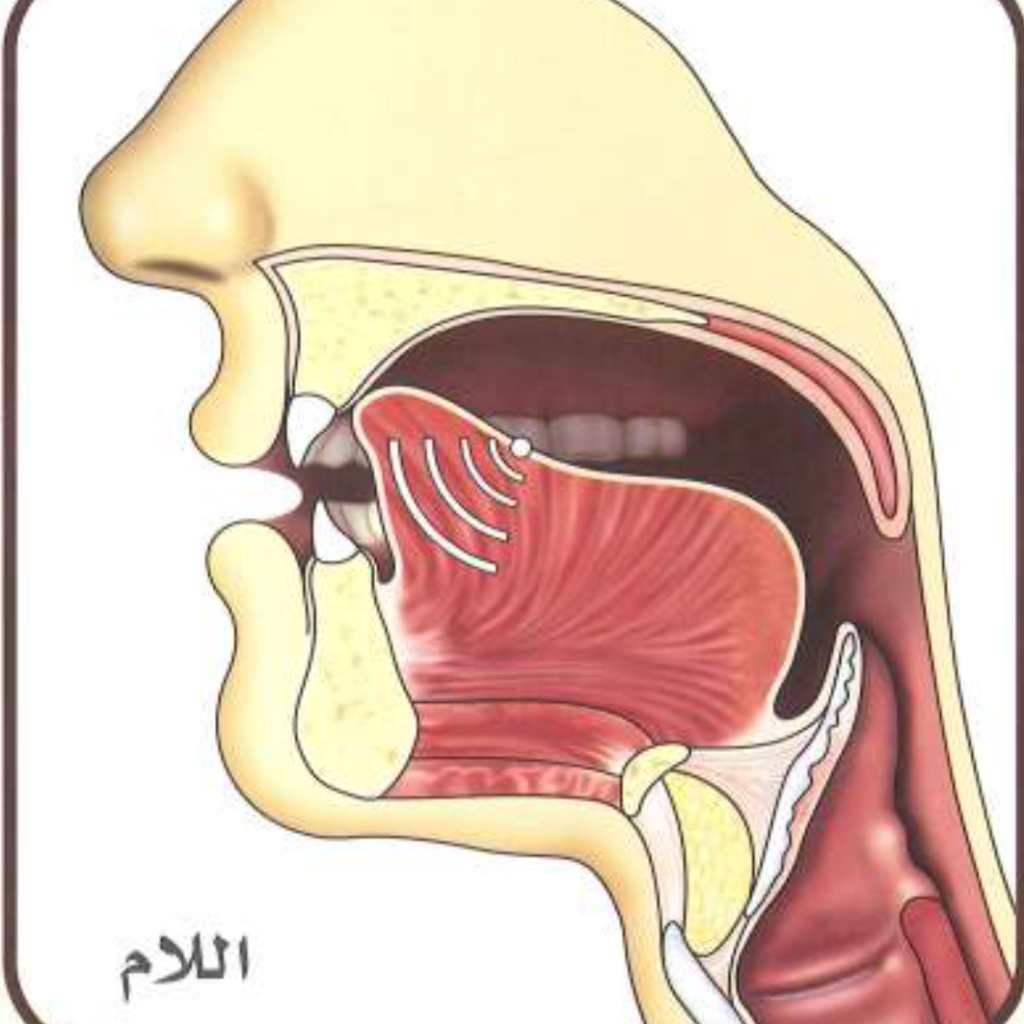
- ل (Lam):
- Articulation: Side of the tongue nearest the front of the mouth.
- Sound: Articulation involves the tip and side of the tongue. (الْ)
- ر (Raa):
- Articulation: Located behind the makhraj of ن.
- Sound: Raised tongue from the back for a heavy ر.
The Tip of the Tongue – 11 Letters
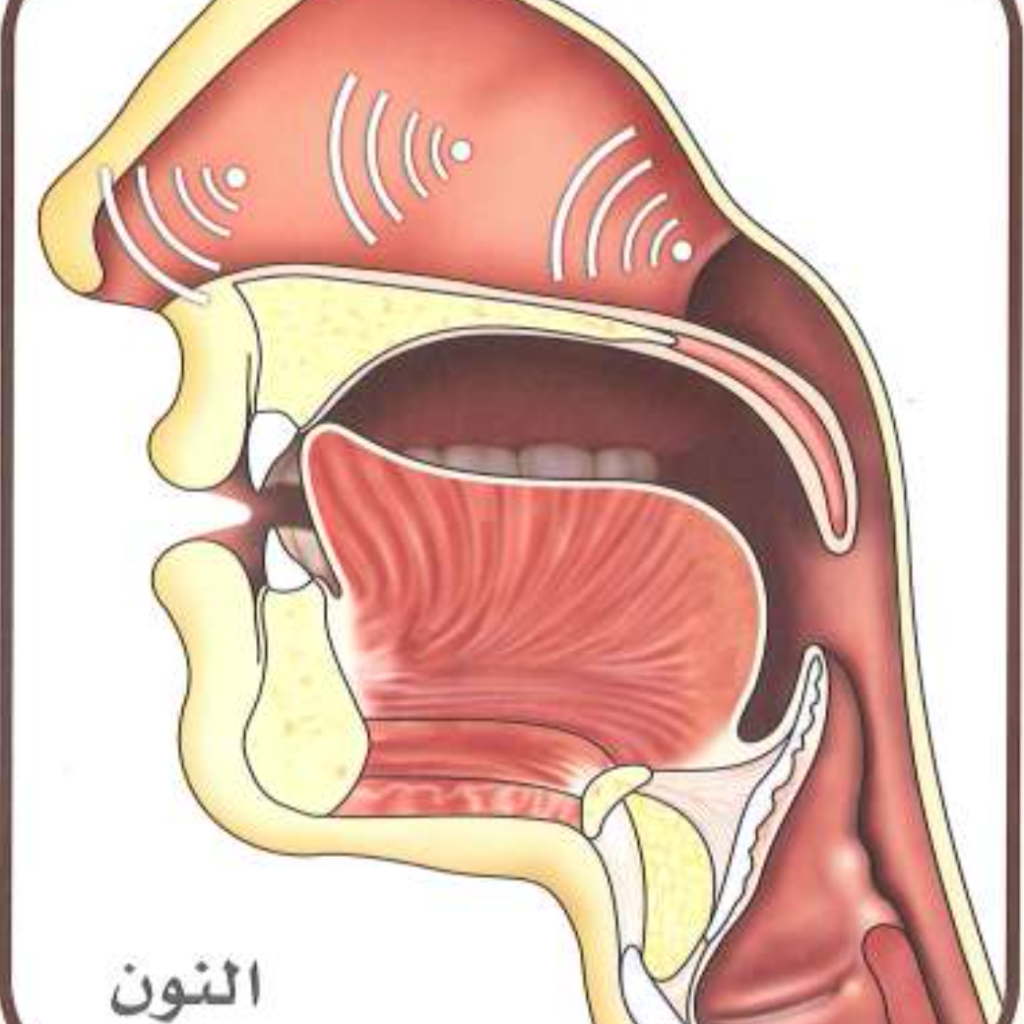
- ن (Noon):
- Articulation: From the tip of the tongue parallel to the gums.
- Sound: Nasal sound originates from the Nasal Cavity. (ان)
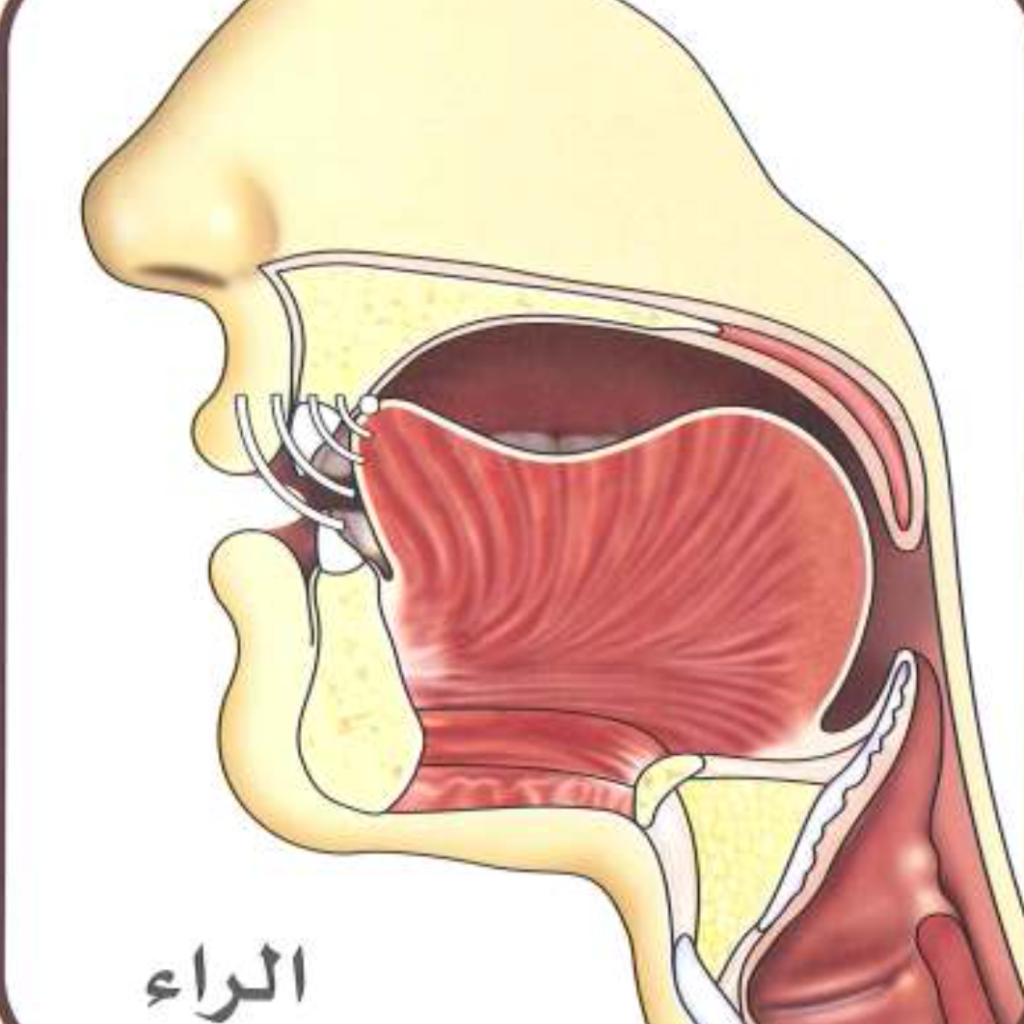
- ر (Raa):
- Articulation: From the tip of the tongue and a little from the edge.
- Sound: Tongue raised from the back for a heavy ر.
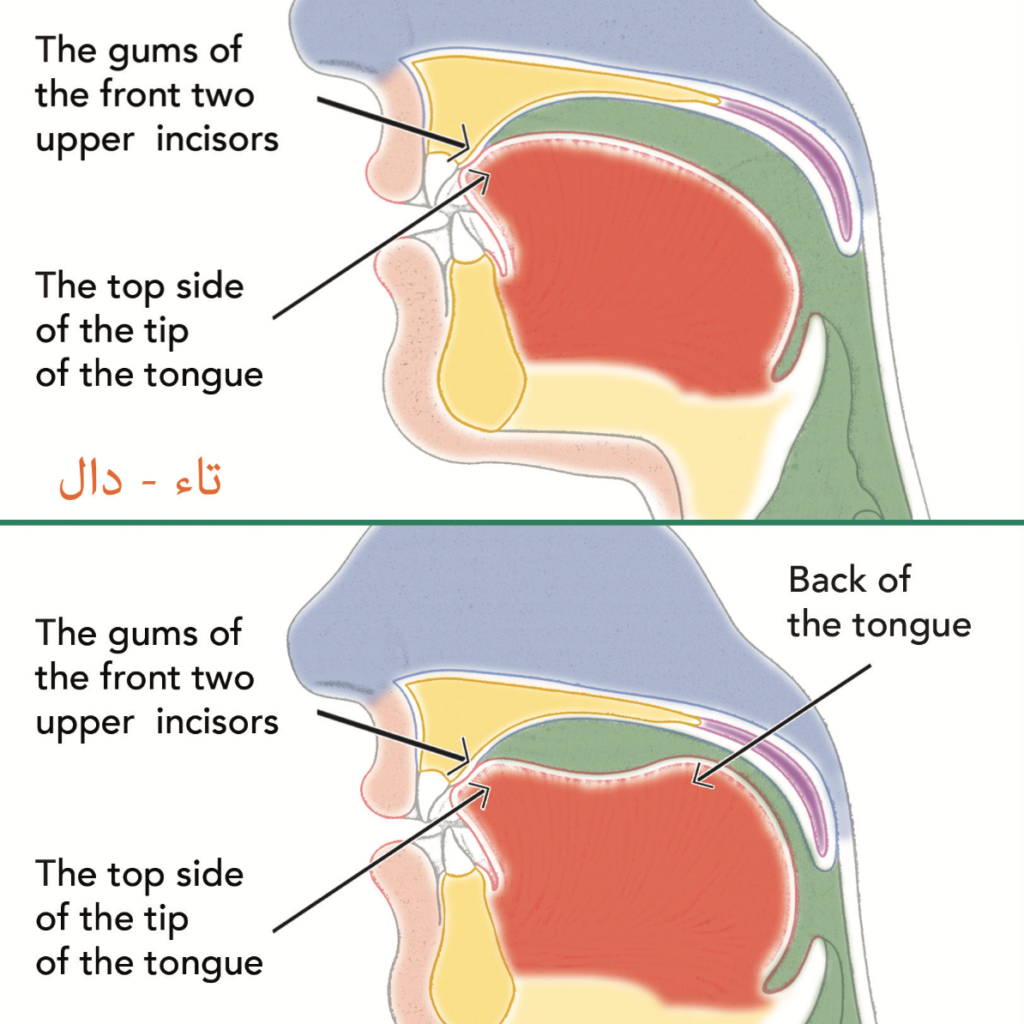
- ط (Taa), د (Dal), ت (Ta):
- Articulation: Tip of the tongue meets the base of the top front teeth.
- Sound: Slight variations in the place of articulation.
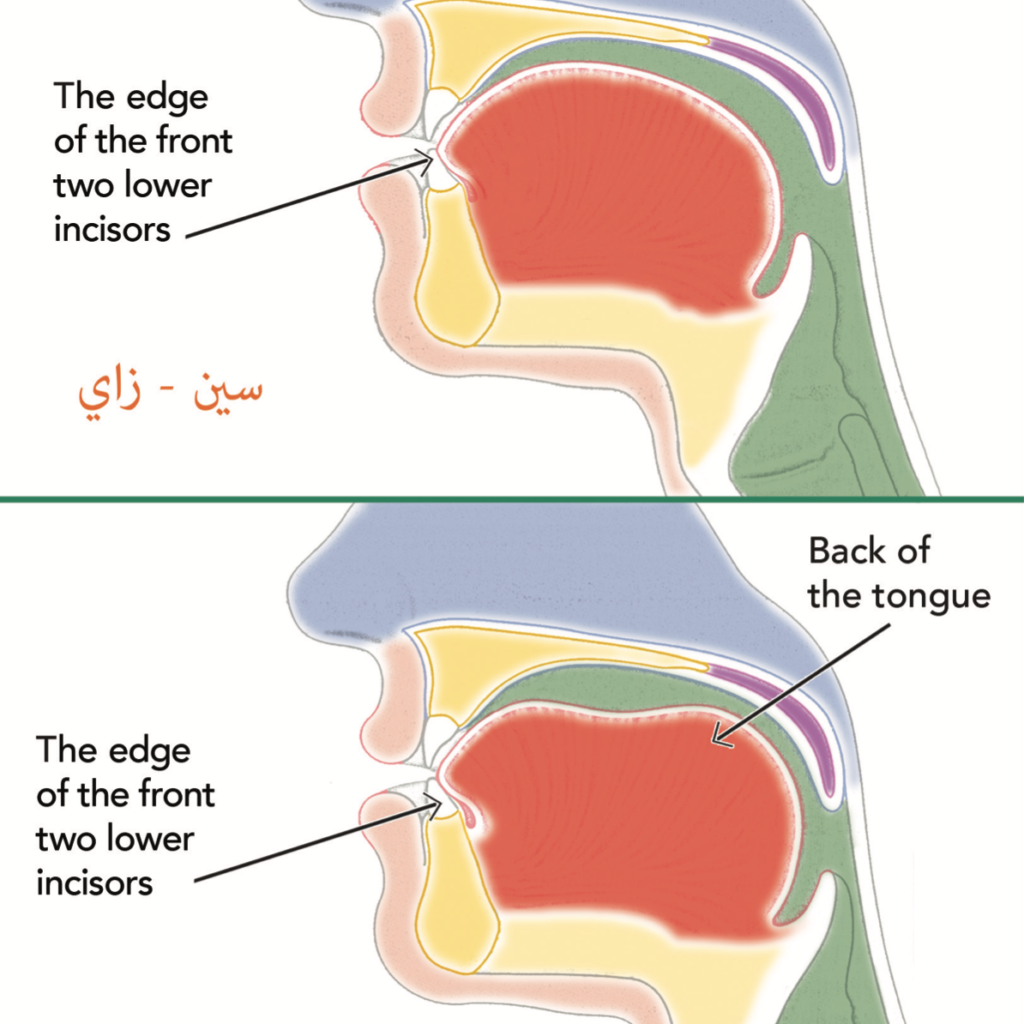
- ز (Za), ص (Sa), س (Seen):
- Articulation: Tip of the tongue meets the place where gums and teeth meet.
- Sound: Airflow direction and tongue position vary for each letter.
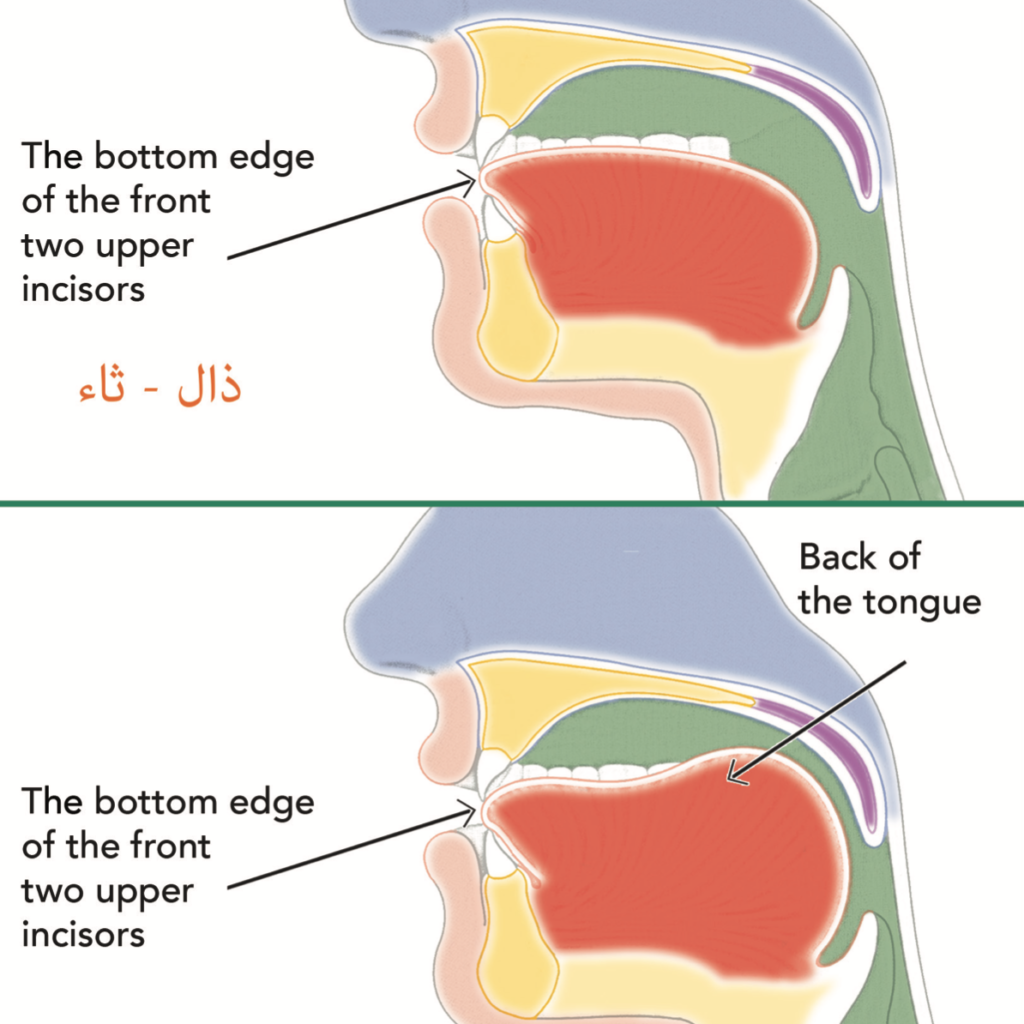
- ظ (Zha), ذ (Dha), ث (Tha):
- Articulation: Tip of the tongue meets the edge of the front upper teeth.
- Sound: Different pressure points on the upper incisor teeth.